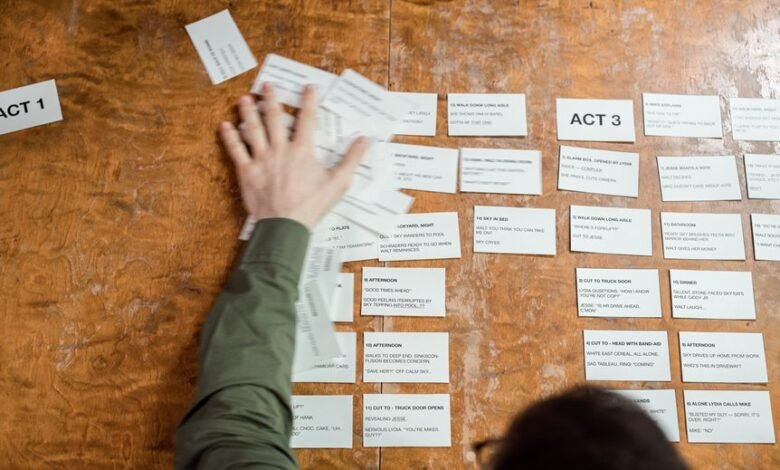
Storyboard shot sequencing translates narrative into a chain of actionable frames. It fixes camera angles, composition, and shot types across scenes, shaping a clear visual language. Rhythm emerges through transitions and pacing, while scene turnover maintains momentum without sacrificing clarity. Aligning with the script—lighting cues and continuity notes—creates coherence. A practical workflow, including pre-visualization and critique, reveals common pitfalls to avoid. The framework holds firm, yet the next step invites a closer look at how each frame carries meaning.
What Storyboard Shot Sequencing Is and Why It Matters
Storyboard shot sequencing is the deliberate arrangement of individual frames to map the visual progression of a story, guiding camera movement, pacing, and composition from scene to scene. It translates narrative into frames, revealing storyboard fundamentals and visual economy.
Shot sequencing relevance lies in coherence, driving momentum while balancing pacing vs. shot count, ensuring purposeful, freedom-loving storytelling without superfluous detail.
Establishing the Visual Language: Angles, Composition, and Shot Types
Angles, composition, and shot types form the core visual language that shapes how a scene is perceived. Establishing angles guides perception, while composing shots balances subject, background, and motion. Shot types rhythm pacing informs tempo and energy, aligning with intent. Transitions continuity notes anchor sequence coherence, enabling deliberate framing choices and visual storytelling freedom without overstatement or redundancy.
Crafting Rhythm: Transitions, Pacing, and Scene Turnover
Transitions drive the tempo of a sequence, guiding the viewer from moment to moment with deliberate gaps, overlaps, and fades that maintain momentum. The storyboard translates story rhythm into measured cuts, ensuring scene turnover remains efficient yet expressive.
Pacing transitions dictate timing between panels, balancing breath and drive.
Precision in framing clarifies intent, inviting freedom within disciplined rhythm and visual clarity.
Aligning With Script and Production: Lighting Cues, Continuity, and Notes
Lighting cues, continuity, and notes anchor the storyboard to the script and the shoot. The frames map lighting cues with precise timing, ensuring consistency across scenes. Continuity notes track prop placement, wardrobe, and movement, while pacing transitions align with narrative cadence. Consider shot types vs angles, integrate pre visualization critique, and secure production alignment for coherent, flexible execution.
Practical Workflow: Pre-Visualization, Critique, and Common Pitfalls to Avoid
Practical workflow begins with pre-visualization as a disciplined drafting phase: a storyboard acts as a living blueprint where concepts translate into sequential frames, camera placements, and timing before a single shot is captured.
The process identifies planning constraints, anticipates equipment considerations, and guards against forgot to include? oversights, enabling critique cycles that refine rhythm, coverage, and visual storytelling with disciplined, freeing clarity.
Frequently Asked Questions
How Do You Adapt Storyboard Sequencing for 3D vs. 2D Productions?
Adaptation workflow guides translating shot sequences between 3d blocking and 2d layouts; in 3d blocking, depth and parallax inform framing. 2d remains concise. The workflow blends timing, camera moves, and composition, preserving intent while embracing freedom and clarity.
What Are Common Software Pitfalls in Storyboard Storytelling?
Common software pitfalls hinder storyboard storytelling, with studies showing 28% of projects delayed by unclear layering. The detached narrator notes issues like misaligned frames, export glitches, and inconsistent pacing, urging precise, visual-frame workflows for creative freedom.
How Is Audience Perspective Measured in Shot Sequencing?
Audience perspective in shot sequencing is measured through perspective metrics and shot timing, enabling precise evaluation of viewer focus, rhythm, and spatial flow; the framework supports freedom by translating viewer experience into quantifiable, visual-frame aligned data.
Which Non-Linear Editing Strategies Influence Storyboard Revisions?
Non linear editing reshapes narrative flow, guiding storyboard revisions through fluid timelines and parallel structures. It reframes scenes, enabling iterative adjustments, typography, and pacing to align vision; storyboard revisions become flexible, liberated tools shaping expressive, nonconsecutive storytelling.
How Can Storyboard Timing Influence Sound Design Choices?
Storybeat pacing governs how sequences breathe, guiding sound cue timing to align with critical moments; the storyboard’s rhythm shapes tonal choices, transitions, and texture, balancing freedom in interpretation with precise sonic alignment to visual frames.
Conclusion
The storyboard, a hyper-focused compass, carves motion into stone: frames erupt into a cinematic atlas where every angle punches above its weight, every cut vaults time forward, and each composition detonates meaning. Visual language crystallizes into a relentless cadence, guiding crews with surgical clarity. Lighting becomes a weather system, continuity a stubborn guardian, and notes the drill sergeant of production discipline. In this precision theater, pre-visualization shatters doubt, while critique hammers smooth, scalable momentum into unforgettable narrative momentum.